Our Latest News & Updates
Rats in the Garden in Winter: What Attracts Them and How to Stop It
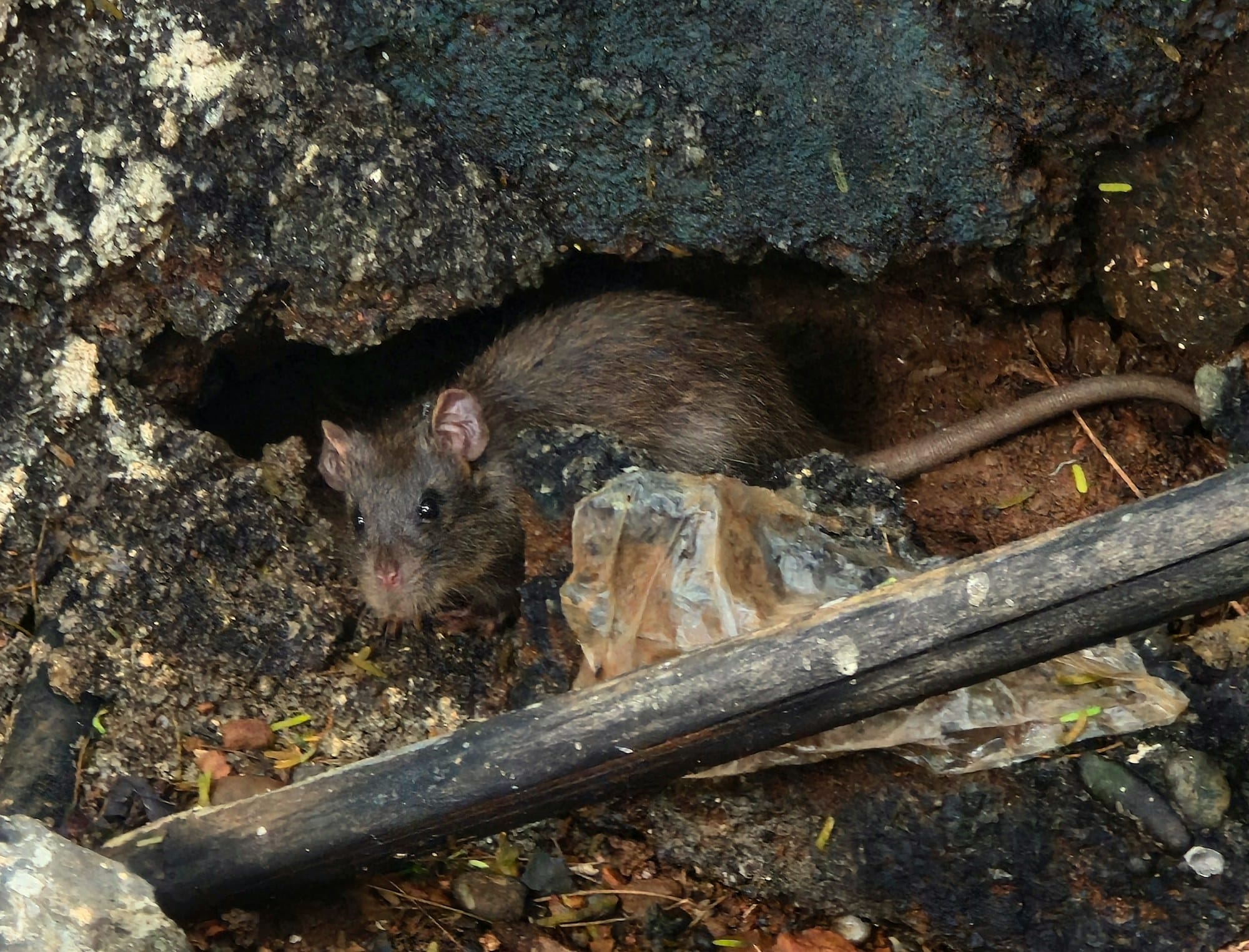
Seeing a rat run across the garden is unsettling, especially in winter when you would expect most wildlife to be lying low. In fact, autumn and winter are when we get the most calls about rats in gardens. Food is scarcer, so rats get bolder, and the things we leave in our gardens in winter are exactly what they are looking for.
Here is what usually attracts rats into a garden, how to tell if they have moved in, and what to do about it.
What attracts rats to your garden in winter
Rats need three things: food, water and shelter. Most gardens offer all three without anyone realising.
- Bird feeders. The single most common cause we see. Seed dropped on the ground is a reliable food source, and rats will climb poles and feeders to reach it.
- Compost bins. Warm, sheltered and full of food scraps – a compost heap can feed and house a whole family of rats.
- Decking and sheds. The space underneath is dry, dark and safe from predators, which makes it ideal for burrows and nests.
- Bins and side bags. Overflowing bins and bags left out before collection day are an easy meal.
- Pet food and chicken feed. Food left in runs, hutches or outside overnight will draw rats in quickly.
- Overgrown corners. Long grass, log piles and clutter along fences give rats cover as they move about.
Signs rats have moved in
- Burrows. Holes about 6–9cm across, often under decking, sheds, paving or the edge of a compost heap, sometimes with loose soil spread in front.
- Runs. Flattened paths through grass or along the bottom of fences and walls.
- Droppings. Dark and capsule-shaped, about the size of a grain of rice but noticeably bigger than mouse droppings.
- Gnaw marks. On shed doors, compost bins, plastic storage boxes or garden furniture.
- Seeing them in daylight. Rats are mostly nocturnal, so seeing one during the day often means there are a lot of them competing for food.
What you can do yourself
- Feed the birds carefully. Use a tray under feeders, only put out what the birds will eat in a day, and stop feeding for a few weeks if you have seen rats.
- Rat-proof the compost. Use an enclosed bin with a lid, stand it on a mesh or slab base, and never add cooked food, meat or dairy.
- Secure your bins. Keep lids closed and avoid leaving bags out overnight.
- Clear cover. Cut back long grass and tidy log piles, especially along fences and near the house.
- Block access under decking and sheds with fine galvanised mesh dug into the ground.
These steps make your garden much less attractive, but they rarely get rid of rats that are already living there.
When to call a professional
Rats in the garden are a problem in their own right – they carry diseases such as Weil’s disease and salmonella – but the bigger worry is that a garden infestation often moves indoors as the weather gets colder. If you have found burrows, are seeing rats regularly, or have had rats in a neighbouring garden, it is worth getting a professional to look.
Our RSPH-qualified technicians will survey your garden and property for free, find where the rats are living and feeding, and give you a fixed written price. We use professional products in secure, tamper-resistant bait stations placed away from children, pets and wildlife, and we follow up until the problem is gone.
Rats in gardens across our area
We treat rats in gardens all year round across the three counties, from suburban gardens in Stockport, Wilmslow and Sandbach to larger rural plots around Nantwich, Uttoxeter and Leek. If you live near water, have a look at our post on why canal-side homes attract rats.
Find out more about our rat control service, or call us on 07971 571 171 or freephone 0800 999 7378. You can also book a free survey online.