
Our Latest News & Updates
Why Are There So Many Wasps This Summer?
If you have noticed more wasps around your garden, home or business this summer, there may be a good reason. Warm weather, established colonies and an increased search for food can all make wasps much more noticeable during the summer months.
A few wasps visiting flowers or feeding outdoors will not always mean there is a nest nearby. However, repeated activity around the same roofline, air vent, shed or section of brickwork could indicate that a colony has established itself within or close to your property.
For homes and businesses across Leek, Staffordshire, Derbyshire and Cheshire, recognising the signs early can help prevent a wasp problem from becoming more disruptive later in the summer.
Why Wasp Activity Increases During the UK Summer
Wasp Colonies Grow Throughout the Season
Wasp colonies begin developing earlier in the year and increase in size as the season progresses. By the height of summer, a well-established nest can contain a substantial number of wasps travelling back and forth in search of food.
This increased movement is one reason wasps can appear to be everywhere during warm weather, particularly around gardens, outdoor dining areas, bins and commercial waste areas.
Warm Weather Means More Outdoor Food
Summer brings barbecues, drinks outside, open windows and more time spent in the garden. Sugary drinks, fruit, meat, pet food and uncovered bins can all attract wasps looking for an easy food source.
Common Summer Attractions Include:
- Open bottles and cans of fizzy drinks
- Uncovered food and barbecue leftovers
- Overripe or fallen fruit
- Outdoor bins with loose or damaged lids
- Pet food left outside
- Sweet residues around pub and restaurant waste areas
Dry Conditions Can Increase Activity Around Properties
During prolonged warm or dry periods, wasps may be drawn towards accessible water and food around homes, gardens and business premises. Bird baths, outdoor taps, bins and dining areas can all become regular stopping points.
Do Lots of Wasps Mean There Is a Nest Nearby?
Seeing one or two wasps does not necessarily mean you have a nest. Wasps naturally travel away from the colony to find food and materials.
However, if you repeatedly see wasps entering and leaving the same opening, it is worth taking a closer look from a safe distance.
Signs of an Active Wasp Nest
A Regular Flight Path
One of the clearest warning signs is a steady stream of wasps following the same route into and out of a building. You may see them disappearing beneath roof tiles, through an air brick, behind fascia boards or into a gap around a window frame.
Activity Around Roof Eaves or Guttering
Wasps frequently use sheltered areas around rooflines. Regular activity beneath the eaves, around soffits or near guttering may suggest that a nest is concealed within the roof structure or loft.
Wasps Entering a Shed or Outbuilding
Sheds, garages and other undisturbed buildings can provide suitable nesting locations. Watch for repeated movement around roof joints, timber panels and small openings.
Unusual Noise Inside a Wall or Ceiling
A large, concealed nest may sometimes produce a faint buzzing or scratching sound. Do not attempt to open the wall, ceiling or roof space to investigate it yourself.
A Visible Paper-Like Nest
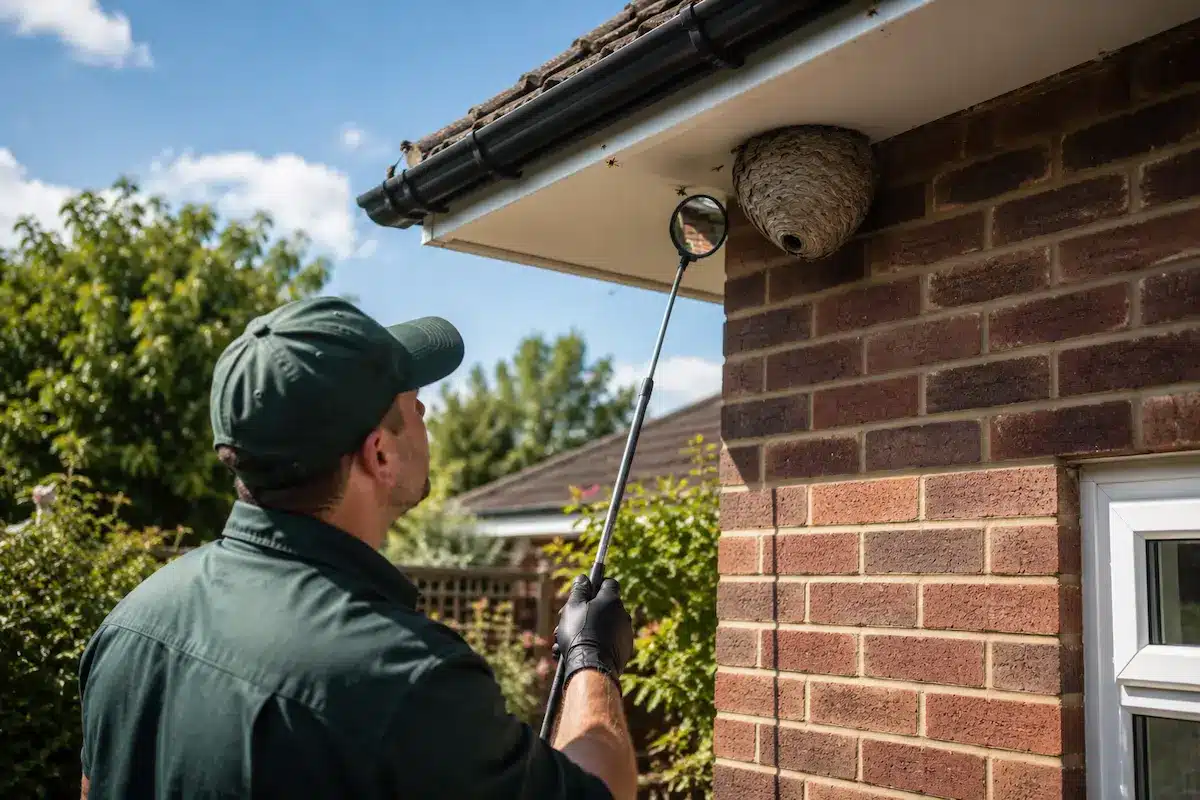
Some nests are built in visible locations such as sheds, garages, lofts or beneath overhangs. A wasp nest typically has a layered, paper-like appearance and may grow considerably as the colony develops.
Where Are Wasp Nests Commonly Found?
Wasps look for sheltered spaces where the colony can develop with minimal disturbance. The nest may be clearly visible, but it is often hidden within the structure of a building.
Common Nesting Areas Around Homes
- Lofts and roof spaces
- Beneath roof tiles
- Behind soffits and fascia boards
- Wall cavities
- Air bricks and ventilation openings
- Sheds, garages and summer houses
- Garden banks, compost areas and disused burrows
Common Nesting Areas Around Businesses
- Warehouse roof spaces
- External wall cladding
- Bin and waste-storage areas
- Outdoor seating areas
- Service yards and loading bays
- Roof voids above offices, shops and hospitality premises
Commercial properties may require a particularly quick response where wasp activity could affect staff, visitors or customers. Town & Country Pest Control provide commercial pest control services alongside domestic treatments.
What Should You Do If You Find a Wasp Nest?
Keep Your Distance
Avoid standing directly in the wasps’ flight path or approaching the entrance to the nest. Wasps may become defensive when they believe the colony is under threat.
Keep Nearby Windows and Doors Closed
If the activity is close to your home, close nearby windows and doors where practical. This can help reduce the number of wasps finding their way indoors while you arrange professional advice.
Keep Children and Pets Away
Restrict access to the affected area, particularly where a nest is low to the ground or close to a doorway, path, patio or play area.
Observe the Activity From a Safe Position
Knowing where the wasps are entering can help a pest control technician assess the problem. You do not need to approach the nest or attempt to expose it.
What Should You Avoid Doing?
Do Not Block the Entrance
Sealing an active entrance does not necessarily resolve the problem. Wasps may search for another way out, potentially driving activity further into the building or living space.
Do Not Strike or Disturb the Nest
Never hit, shake, knock down or spray a visible nest at close range. Disturbing the colony can provoke a rapid defensive response.
Do Not Enter a Loft Without Taking Advice
If you suspect that a nest is in the loft, do not enter simply to confirm it. Your arrival may place you close to the nest before you realise where it is located.
Be Careful With DIY Treatments
Shop-bought sprays may appear convenient, but reaching a concealed or elevated nest can place you unnecessarily close to active wasps. Treatment can also be ineffective when the product does not reach the nest itself.
Will a Wasp Nest Go Away on Its Own?
A wasp colony is seasonal, but waiting for activity to decline is not always practical or appropriate. A nest near a doorway, bedroom window, workplace entrance or family seating area may present an ongoing problem throughout the busiest part of summer.
The right response will depend on the nest location, the level of activity and the risk it presents. A professional assessment can help you decide whether treatment is necessary.
When Should You Call a Pest Control Technician?
Professional advice is sensible when the nest is concealed, difficult to reach or located close to people and pets.
Arrange Help When:
- Wasps are repeatedly entering your home or workplace
- The nest is near a door, window, path or outdoor seating area
- You can see a regular flight path into the roof or wall
- The nest is inside a loft, cavity or other enclosed space
- Someone at the property is vulnerable to stings
- Wasp activity is affecting customers, employees or visitors
- You cannot safely identify or access the nest
Town & Country Pest Control can identify and treat wasp nests with minimum fuss. Find out more about our dedicated wasp nest removal service.
Local Wasp Nest Removal in Staffordshire, Derbyshire and Cheshire
Based near Leek in Staffordshire, Town & Country Pest Control provide discreet, professional pest control for domestic and commercial properties throughout Staffordshire, the Staffordshire Moorlands, Derbyshire and Cheshire.
We offer an initial pest control survey and a clear, no-obligation quote, allowing the problem and affected areas to be properly assessed before treatment is agreed.
Concerned About Wasp Activity?
If you are regularly seeing wasps around the same part of your property, do not wait for the activity to become more disruptive. Call for straightforward advice or arrange a visit from an experienced pest control technician.
Call 07971 571171 or visit our contact page to request a free, no-obligation pest control survey.